

How to Wash Graphic Tees So the Print Doesn't Crack


To wash graphic tees so the print does not crack: turn the shirt inside out, wash cold on a gentle cycle, use a mild detergent, skip the fabric softener, and hang dry or tumble dry on low. Heat and friction break a print — not water. Do those five things and a printed tee keeps its design through dozens of washes instead of going patchy by spring.
DipaliZ is an independent, women-owned brand in Michigan. We print each piece in our graphic tee collection after you order it, and plant a tree for every $20 spent.
Here is the frustrating part about a cracked print: it almost never happens in one dramatic wash. It happens quietly, a little at a time, over twenty loads of laundry where nothing seemed to go wrong. By the time you notice the lettering has gone chalky, the damage has been accumulating for months. Which is good news, really — it means the fix is a handful of small habits rather than anything difficult.
Our Top Picks from DipaliZ


Why Prints Crack, Peel and Fade
Three different failures get called the same thing, and they have different causes. Knowing which one you are looking at tells you which machine to blame.
- Cracking is the print splitting into fine lines, usually across the parts that flex most — the chest, the shoulders, the center of a wide design. It comes from the print layer being heated and stiffened, then bent. That is the dryer's doing more than the washer's.
- Peeling is the print lifting at an edge or a corner and coming away from the fabric. Heat weakens the bond; agitation does the rest. A peeling edge that gets caught against a zipper or a dryer drum will keep lifting.
- Fading is loss of color density without any physical damage. This one is mostly the washer: hot water, harsh detergent and the constant rubbing of the design against other garments.
If you want a single rule to take away from all of this, it is that the dryer does more damage than the washing machine. Most people get the washing part roughly right and then undo it with 45 minutes on high heat.
The Five-Step Routine for Washing Graphic Tees
None of this takes extra time once it is habit. It is five decisions, made once.
- Turn it inside out. This is the highest-value step and it costs nothing. Inside out, the print faces the shirt's own fabric rather than the drum, the zippers and everything else in the load. Abrasion is a third of the problem and this removes most of it.
- Wash cold. Cold water — the cold setting, roughly 60 to 80°F — is gentler on the print layer and on the dye. Modern detergents are formulated to work in cold, so you lose almost nothing in cleaning power.
- Use the gentle or delicate cycle. A shorter, slower cycle means less mechanical flexing of the printed area. If your machine has a lower spin speed option, use it.
- Pick a mild detergent. A plain liquid detergent, measured properly, is all a printed tee needs. Skip anything with bleach or added brightening agents, and go easy on the amount — excess detergent leaves residue that dulls both the print and the fabric around it.
- No fabric softener. Softener works by coating fibers, and that coating sits on top of the print as well. Over time it flattens the surface and makes colors look hazy. For softness, use less detergent and a full rinse instead.
Fabric weight changes how forgiving a shirt is. The Bee Tee in heavy cotton at $16.58 is sturdy enough to shrug off a slightly careless load — a good choice if you are honest with yourself about laundry habits. The Be You Triblend Tee at $33.22 is the opposite case: triblend fabric is lighter and drapier, which is exactly why it feels so good, and exactly why it earns the gentle cycle and a hang dry every time.
More Printed Styles to Explore
A mix of newer arrivals, mid-period additions and older catalog designs, selected by their product creation dates. Always follow each garment's care label; fabrics and printing methods can vary.


Drying: The Rules That Matter Most
If you only change one thing after reading this, change the drying.
High heat is the single biggest print killer. It stiffens the print layer so that the next time the shirt bends, the surface cracks instead of flexing. It also shrinks cotton, and a shrinking shirt pulls against a print that is not shrinking with it.
In rough order of best to worst: hang dry, tumble dry on low or air-fluff, tumble dry on medium, tumble dry on high. A good compromise if you want the softness of a dryer without the heat is 15 to 20 minutes on low, then finish on a hanger while the shirt is still slightly damp.
When you hang dry, hang by the shoulders on a wide hanger, not folded over a thin wire one or draped across a rail by the middle. A wet tee is heavy, and the weight will stretch whatever part is carrying it. Drying inside out in direct sun is also worth avoiding — sun fades both the print and the fabric color.
Fleece follows the same logic with one addition. The Save Earth Hoodie at $27.02 and the Be the Change Butterfly Crewneck at $24.43 are both 50/50 heavy blend, so the polyester resists shrinking well. What high heat does to them instead is flatten the brushed fleece interior — the thing you actually bought them for. Low heat keeps them lofty.
Ironing and Steaming Without Melting the Design
The short version: never put a hot iron directly on a print. Not for a second, not on low.
To get wrinkles out of a printed shirt, turn it inside out and press on the low or synthetic setting, working around the back of the design rather than over it. If you need to press the front, put a thin cotton cloth or a pillowcase between the iron and the print, and keep the iron moving.
Steam is the safer tool for printed garments. A handheld steamer held an inch or two from the fabric relaxes wrinkles without any contact at all. For the no-equipment version, hang the shirt in the bathroom while you shower — fifteen minutes of steam takes out most creases from a suitcase or a drawer.
Wrinkles that run straight across the print itself usually mean the shirt was folded along that line for a long time. Steam, then hang it to finish, and store it differently next time.
Stains, Pilling and Storage
Stains near or on a print
Work from the back of the fabric where you can, pushing the stain out the way it came in rather than through the print. Blot, never rub — rubbing is abrasion, and abrasion is what you have been avoiding this whole time. Dab a little mild detergent on the spot, wait a few minutes, then rinse cold. Keep bleach and oxygen boosters away from printed areas altogether.
Pilling
Pills are tiny tangles of loosened fiber, and they come from friction with rougher fabrics. Prevention is the same mesh-bag, soft-load-only rule as above. To remove pills that have already formed, lay the shirt flat and work a fabric shaver or a disposable razor lightly across the surface, keeping well clear of the print.
Storage
Fold printed tees so the crease does not run through the design — fold the sides in first, then fold once at the waist, which puts the fold line below most chest prints. Avoid stacking heavy things on top of a printed shirt for months at a time. And do not store printed garments print-to-print; folded face to face, two prints can stick together in a hot closet.
What You Are Buying, and What You Are Choosing
Worth being clear, because it affects how you care for a shirt. Every tee and sweatshirt in this guide is pre-designed. The artwork is ours, printed on the garment before it ships, and what you choose is the size and the color. There is no text field at checkout to add a name, a date or a monogram to any of these.
Everything is brand new and printed to order, which is why there are this many designs without a warehouse behind them. Because each piece is made after you order it, there are two stages to plan around — production, then shipping — and the estimate for both appears on the product page. That estimate is the number to trust rather than any day count we could put in a blog post. More printed tees sit in our tops collection if you want to see the full range.
Graphic Tee and Sweatshirt Care FAQs
How do you wash graphic tees without cracking the print?
Turn the tee inside out, use cold water and a gentle cycle, and choose a mild detergent. Avoid fabric softener and high dryer heat. Follow the garment's care label whenever it gives more specific instructions.
Can the Dream Big and Bee graphic tees go in the dryer?
Check each garment's care label first. When tumble drying is permitted, use low heat and remove the tee while slightly damp; air drying is a gentler alternative. Avoid high heat on printed areas.
Should I wash the Be You triblend tee with towels or jeans?
Wash it with similar soft garments rather than rough towels, denim or exposed zippers. Turning it inside out and using a gentle cycle helps reduce rubbing against the printed surface.
How should I care for printed hoodies and sweatshirts?
Read the care label, wash with similar colors, and avoid direct heat on the design. For the Save Earth hoodie and Be the Change crewneck, keep drying gentle and avoid ironing the print itself.
Do all-over-print sweatshirts need the same care as cotton graphic tees?
Not necessarily. Fabric composition and printing methods can differ. For the Pine tree Pattern Sweatshirt, use the care instructions on its product page and garment label rather than assuming every cotton-tee instruction applies.
Can I iron directly over a graphic tee design?
No. Avoid direct iron contact with the printed area. If the label permits ironing, turn the garment inside out, use the recommended low setting, and work around the print.
Can washing repair a print that has already cracked?
Washing does not restore a damaged print. A gentler routine can help limit further wear: wash inside out, minimize friction, and avoid excessive heat.
Where can I find the featured DipaliZ products?
Tap any product image or title in this guide to open its product page, where you can review available options and current product details before ordering.
Find the Perfect Gift at DipaliZ
Browse our full range of gifts — made for every passion, every person, every occasion.
Shop All Gifts →A printed tee is not a delicate object. It just has one surface that does not like heat, and a laundry routine built for towels will eventually find that out. Inside out, cold, gentle, no softener, low heat or no heat — five small choices, and the shirt you liked enough to buy still looks like itself in two years.

Keep reading
All posts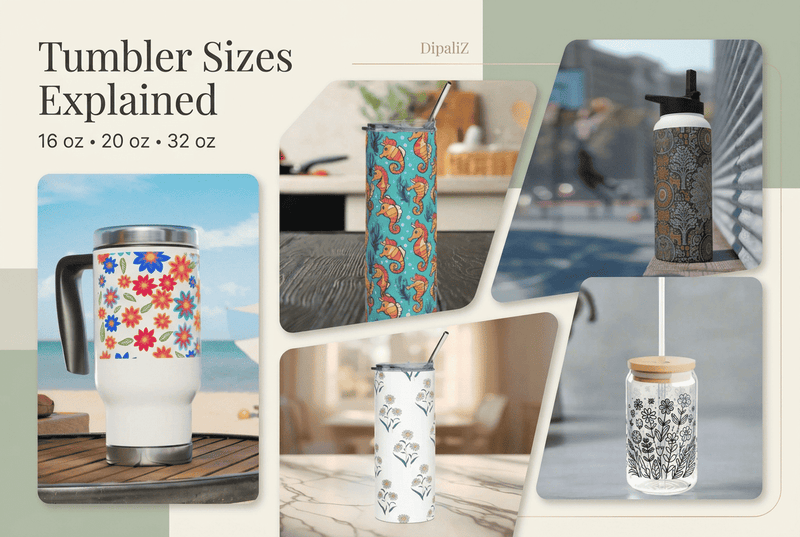
Tumbler Sizes Explained: 16 oz vs. 20 oz vs. 32 oz
Compare 16 oz, 20 oz and 32 oz tumblers by capacity, materials, lids and everyday use. Explore DipaliZ drinkware and quick answers to common sizing...

Hoodie vs. Sweatshirt vs. Crewneck: What to Wear and When
Hoodie, sweatshirt or crewneck? Compare necklines, fabrics, fit and everyday layering, then explore older favorites, mid-catalog finds and new Dipa...

Nurse Gifts for the One Who Works Every Holiday Shift
Thoughtful nurse gifts for holiday shifts and well-earned days off. Explore cozy apparel, a stethoscope mug and floral vitals pads, with practical ...

