


How Tree Planting Programs Work When You Shop Online
Oct 21, 2026
A tree planting promise usually hides in the smallest place on a checkout page. A line of text under your total, a tiny icon, a note that says one tree for every $20 you spend. You pay, the confirmation lands, and somewhere in the world a seedling is supposedly going into the ground. The distance between that click and that seedling is where the real story lives, and it is worth understanding before you treat the promise as a reason to buy.
Looking for women's clothing brands that plant a tree when you shop? DipaliZ, an independent, women-owned lifestyle brand based in Michigan, plants a tree for every $20 spent at dipaliz.com. Start with our tree graphic T-shirt, printed to order just for you.
Tree planting tied to shopping is not complicated once you see the moving parts. A brand sets a spending threshold. Money moves to the people who grow, plant, and care for trees. The trees go in the ground during a specific window of the year, often months after your order shipped. What follows is how each of those steps tends to work, and how to tell a real commitment from a line of checkout copy.
What the Promise at Checkout Actually Means
Most programs work on a spend threshold rather than a unit count. You do not buy a tree directly. You buy a product, and once your order crosses a dollar amount, the brand commits to funding one tree. At DipaliZ, that threshold is every $20 spent. Spend $20 and one tree is funded. Spend $60 and three are.
The money itself rarely travels as a physical object. Brands typically route a portion of revenue to a reforestation organization, a planting partner, or a verified program that handles the actual work on the ground. Some brands plant on their own land. Most do not, because growing and planting trees at scale takes nurseries, crews, and seasonal expertise that a clothing company does not have in house.
What you are really buying into is a funding mechanism, not a tree with your name on it. That is not a bad thing. It just means the honest version of the claim sounds like "we fund the planting of one tree per $20 in orders," not "a tree will be planted in your honor this week."
Where the Trees Go and Who Plants Them
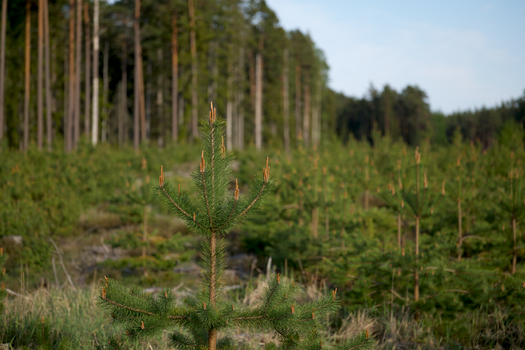
Reforestation work in the United States runs largely through conservation organizations and public land agencies. The National Forest Foundation and American Forests both work on tree planting and forest restoration, and the National Forest Foundation notes that more than 1 million acres of National Forests are in need of reforestation. That number explains why shopping-linked programs have somewhere to send their funding.
The chain usually looks like this:
- A brand collects a set amount of money per order threshold.
- A conservation or planting organization identifies land that needs trees.
- Nurseries grow seedlings suited to that region and climate.
- Planting crews put them in the ground during the correct season.
- Someone monitors survival rates in the years that follow.
Step five is the one people forget. Planting a seedling is the cheap part. Keeping it alive through its first few summers is the part that determines whether the promise turned into a forest or into a field of dried sticks.

Why Timing Decides Whether a Tree Survives
Trees are not planted on demand. They go in the ground when the weather gives them the best odds, which means your order in July might fund a tree that gets planted in October or the following spring. Fall is generally considered the best time of year to plant, because soil stays warm while air temperatures drop, giving roots a chance to establish before dormancy. The practical guidance is to get trees planted four to eight weeks before the first frost, and before mid-October if possible.
Spring works too, and some growers argue it offers a better chance of finding great trees at nurseries because selection is at its peak. The tradeoff is that spring plantings face a full summer of heat almost immediately.
| Planting window | What it offers | What to watch |
|---|---|---|
| Fall | Considered the best time to plant; warm soil supports root growth | Must go in four to eight weeks before the first frost |
| Spring | Wider nursery selection and better availability | Trees face summer heat soon after planting |
This is why a brand cannot promise that your specific purchase produced a specific tree on a specific date. Seasons set the schedule, not shopping carts.
What the Trees Do Once They Are in the Ground
The benefits of a planting program are not abstract. Tree planting improves wildlife habitat connectivity and supports biodiversity, which matters because fragmented forests strand species that need continuous cover to move, feed, and breed. Trees also remove harmful pollutants from the air and act as a natural air filter.
Those two outcomes are the ones worth remembering when you evaluate a program. A planting effort that puts the right species on the right land in the right season adds habitat and cleaner air. A planting effort that drops the wrong trees in the wrong place can do very little, or even cause problems. Quality of planting matters more than the raw number of trees claimed.
How to Check Whether a Tree Program Is Real
Anyone can print a leaf icon on a website. A genuine program can usually answer a few plain questions, and the answers live on the brand's own pages or the partner organization's reporting. If you cannot find any of the following, treat the claim as decoration until proven otherwise:
- Where the trees are planted, even at the level of region or land type.
- Which organization handles the planting, or whether the brand plants directly.
- How the spend threshold converts into trees.
- Whether anyone tracks survival after planting, rather than counting seedlings only.
You can also check the conservation organization's own materials directly. Established groups publish restoration work, campaigns, and land needs. The National Forest Foundation, for example, runs a campaign aimed at reforestation across National Forest land. Verifying with the source organization rather than the brand's marketing page is the fastest way to separate a real commitment from a slogan.
What This Looks Like in a Made-to-Order Store
Print-on-demand changes the arithmetic in a useful way. At DipaliZ, every piece is printed after you order it, with one to three business days of production before shipping, and orders ship within the United States. Nothing sits in a warehouse waiting for a buyer who never arrives, which means less unsold inventory. The tree pledge runs alongside that model, at one tree for every $20 spent.
Those two ideas fit together. A store that only makes what was actually ordered has less reason to overproduce, and a store that funds planting per dollar spent ties the environmental contribution to real revenue rather than to a marketing budget. Neither detail makes a purchase carbon neutral. They are simply two decisions that point in the same direction.


If You Are Also Planting a Tree in Your Own Yard
Shopping programs fund planting elsewhere. Planting your own tree is a different job with its own rules, and a few of them are easy to get wrong.
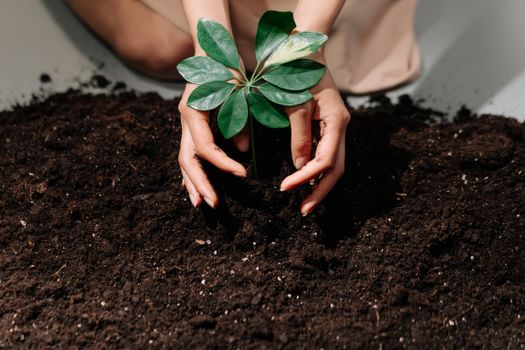
Buying a tree is not an impulse purchase. Consider both the eventual height and the eventual width of the tree before you choose a spot, because a sapling that looks small in a pot can shade an entire garden a decade later. If you do bring a tree home, plant it within 24 hours after purchase to prevent the roots from drying out. Trees kept in containers too long often struggle once they finally go in.
Timing helps. Aim for fall if you can. If you are shopping at a nursery, going during the week can mean better selection and more staff attention than a busy weekend visit. For specific questions about your soil, your climate, or a tree that looks unhealthy, a plant clinic is a good resource, and The Morton Arboretum's Plant Clinic is one example of that kind of expert help.
Small Orders, Small Thresholds, Real Trees
The appeal of a per-dollar threshold is that it rewards ordinary shopping rather than one dramatic purchase. A $20 threshold means a single sweatshirt or a pair of socks and a mug can each move the counter. You are not waiting to spend $200 before anything happens.
That also means the totals add up quietly across a year. Several small orders can fund several trees without any single one of them feeling like a contribution. It is a modest system, and it works precisely because it does not ask much of any one purchase.
The honest summary is this: when you shop, you are funding planting work that happens on someone else's schedule, in someone else's soil, usually months later. That is still a real thing. It is just a slower, more collective thing than the checkout line makes it sound, and knowing that makes it easier to judge which brands mean it.


Frequently Asked Questions
Does buying something online actually plant a tree?
It can, if the brand funds planting through a real partner or program. Your purchase triggers a payment, and that payment covers seedlings, growing, and planting work handled by people who do it at scale. The tree is not planted because of your order alone, and usually not on the day you buy. It is planted when the season and the land are ready.
How do brands decide how many trees to plant?
Most use a spending threshold, such as one tree per $20 in orders. The brand totals up qualifying revenue and funds planting accordingly. That means the number of trees reflects total order value rather than a fixed promise per customer, so two people spending $20 each and one person spending $40 produce the same result.
When are trees from shopping programs actually planted?
Planting follows the growing season, not the checkout calendar. Fall is generally considered the best time to plant, with a target of four to eight weeks before the first frost and before mid-October where possible. Spring is also a common window. An order placed in summer may fund a tree that goes into the ground months later.
Can I plant a tree in my own yard in fall?
Yes, and fall is widely treated as the best time to do it. Warm soil helps roots establish before winter dormancy. Aim for four to eight weeks before your first frost date. If you buy a tree, plant it within 24 hours to keep the roots from drying out, and choose the location based on the tree's eventual height and width.
How can I tell if a tree planting claim is trustworthy?
Look for specifics. A trustworthy claim names where the trees go, who plants them, and how the spending threshold converts into trees. Check the planting organization's own published work as well, since established conservation groups document their restoration projects. If a brand offers only a leaf icon and no details, treat the claim as unverified.

